Showing posts with label driving. Show all posts

Monday, May 23, 2011

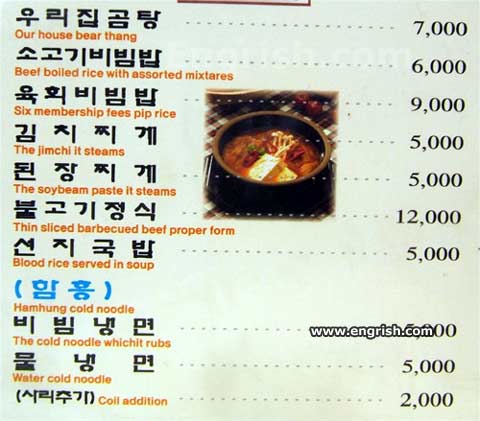
Energy Conservation - in English only, please!


If you care about the environment, then let's hope you speak English! Or maybe POSTECH is just trying to keep foreigners off the road, under the guise of being green...?

Wednesday, April 20, 2011

Driving in Korea: Traffic Cameras

One of the worst things about driving in the US is the paranoia. It often seems that the main duty of police departments in many states is to trap and ticket errant speeders - on the highway, in the city, or on a dirt road behind your house. No matter where you go, a cop has the jurisdiction to pull you over and give you a ticket. They lie in wait - in hiding - for HOURS, as if speeding were the nation's biggest crime problem. (It's obviously not, and everyone knows that it's how police departments get paid. In a budget crunch there are suddenly more fast drivers on the road!)

Speeding is not a problem. It seems much more dangerous for speeding drivers to be constantly distracted, worried that every shadow and light flash on the road is their next ticket, braking and speeding and changing gears and lanes, always attempting to outsmart or outspeed the law.

Korean cops don't really bother with traffic violations, at least on the scale that their American counterparts do. The police officers that are on patrol serve more as a reminder that they're around than a threat of any particular action. Though I've heard it's possible, I have NEVER seen a Korean cop in hiding, trying to catch an unsuspecting traffic violator. Police cars here literally do not turn off their red-and-whites. Ever. It's as if they are actually trying to PREVENT crime - imagine that! - drawing attention to their presence instead of slinking around in shadows and trying to catch you red-handed.

Perhaps this is material for another post. I'm slightly off-topic here.

Cameras have replaced cops in Korea as the babysitters of the roadway. Speeding is controlled almost exclusively by CCTV. Cameras with radar guns are mounted above the street at varying intervals to take pictures of speeding violators as they pass. Tickets are mailed to the driver.


Korea doesn't even try to hide the cameras - not only are they out in plain site, there are street signs WARNING you of their presence ("Police Enforcement CCTV in 200m"). GPS units - a staple in virtually every Korean car nowadays - warn you when they are approaching and tell you when to slow down.

[If you're speeding, the GPS flashes red and beeps to warn you that a camera is approaching - the red exclamation point in the video - and stops once you pass under it.]


Though this kind of enforcement might never fly in the US (*sob* violation of privacy!), it works for Korea. It's a pain in the ass to keep speeding up and slowing down every few kilometers, so drivers tend to maintain a consistent pace. It actually makes the police force seem like they're trying to solve a dangerous situation, instead of using a dangerous situation purely as a money-making scheme.

Wednesday, April 06, 2011

Double Parked

Last night I came out of a friend's apartment building to discover my car trapped behind a double-parked sedan. To make matters worse, there were empty parking spots on both sides of me! Back home in the US, I might have been excused for whatever crime of passion this discovery drove me to.

But in Korea, where space comes at a premium (population density is 15 times higher than in the US), it's really not such a big deal. Double parking is such a common practice that people post their cell phone number on their windshield so that trapped drivers can call them when they want to leave.

So I was only mildly annoyed when I found myself blocked in, in anticipation of the struggle to communicate my dilemma in Korean over the phone and then wait for the owner to come down and move his car three feet in either direction.

But then I actually took a glance around the offending car. He hadn't posted his cell phone number anywhere, the jerk! I stole a quick look to see if anyone was in earshot of a shattering windshield. The security guard in his nearby quarters put a swift end to that idea. I decided instead to knock on the guard's door. This seemed a situation that warranted some official police-like action.

He seemed quite surprised to see me, even after I explained the circumstances. He shook his head, and put his hands out in front of him and moved them forward in a motion that suggested pushing. Alright! I almost shouted. Let's go kick his ass!

But then I realized he wasn't talking about pushing the owner around. He was talking about the vehicle.

The car was, in fact, unlocked. The parking brake was off. And the car was in neutral. I could have done a lot more than shatter the guy's windshield. I could have pushed his car off a goddamn cliff. (For the record, I didn't.)

His car slid out of the way with such a gentle nudge that it should have been a crime.

Monday, March 21, 2011

Drinking? Hire a Designated Driver!

The drinking culture is alive and, well, drunk in Korea. Couple that with the fact that almost everyone has a car, and you can see where things have the potential to go. So what's a man to do when he wants to go out and get smashed, but doesn't want to leave his car at the bar?

Enter: The Designated Driver for Hire


In many Korean cities and towns there is a service called Daeri Unjeon [대리운전] (lit: "substitute driver"). When you're ready to go home, the substitute driver will show up at your place of drinking and drive you home - in your own car. Someone else will come to pick up the driver later.

The kicker: When I used the  대리운전 for the first time over the weekend, it was the same price as a taxi. Exactly.

Apparently this service is catching on in some US cities as well.

The next time you're at the bar, ask the staff for the number for a substitute driver, and store it in your phone. You never know when you might need it.

Thursday, December 23, 2010

Passing Your Korean Driver's License Test

The other day I wrote about the requirements for getting a Korean driver's license, one of which is taking a 20-question computerized test. On Monday afternoon, after 22 months of living (and driving...oops!) in Korea I finally I rode my scooter out to the Driver's License Agency office in Pohang.

The test was easy enough; though the time limit is 30 minutes, it didn't take me more than 10. I passed with a score of 80% (the passing mark is 60%, or 12 questions).


The hardest thing about the test was trying to interpret the English wording of each question. It had been translated quite confusingly from Korean, and at times it was hard to tell what the sentence was trying to convey - not unlike trying to decipher the "food" options on your average Korean menu.


Usually, though, it was easy enough to guess the correct answer by identifying a few key phrases in the options:
  • "slow down"
  • "drive carefully"
  • "watch out"
  • "be alert"
And avoiding options with the phrases:
  • "don't pay attention"
  • "speed up"
  • "keep driving at the same speed"
  • "don't think about the child in the road"

Most of the questions consisted of a picture with 5 or 6 multiple choice options. I was instructed to choose the 2 best answers based, usually, on driving safely and what to watch out for in the accompanying scenario.


For example, given the following picture...

...you may be asked:

In this scenario, which are the safest ways to proceed? (Choose 2)
  1. Speed up to pass the pedestrian before she crosses the road.
  2. Be alert for parked cars backing out into the road.
  3. Honk your horn to make the pedestrian walk faster.
  4. Reduce your speed to give the pedestrian time to cross.
  5. Stop your car in the middle of the road and look for any other pedestrians or parked cars.

Another question was an animation of a car driving down a road, switching lanes, and turning left at a traffic light. Other cars would move around in the simulations and pedestrians would cross in front of you. The question asked me to identify the two most dangerous situations in the animation.

Though most were common sense, on a couple of questions I had to guess completely, since they covered things like fines or administrative stuff. I don't know how I scored on them - the test never gave me a breakdown of my results.

[If you still want to prepare for the test, check out this excellent Korean road guide prepared by the Osan US Air Force base.]

The hardest part of the whole day was actually FINDING the Driver's License Agency office. What should have been a simple 30-minute trip turned into 2 hours. The map that the agency provided on their website was mind-numbingly terrible. At one point I stopped at a government office to ask for directions. A helpful employee looked at the map quizzically for a few minutes, crossed it off, then turned the paper over and hand-drew his own map on the back that turned out to be impressively accurate.

If you're trying to find your own local DLA branch office, I suggest more reliable sources (Google maps, Daum maps, any bum on the street) for directions to get to your particular testing center.

the DLA's version
Google maps: got it right.


Safe driving!

Friday, December 17, 2010

Getting a Korean Driver's License

homegirl is dangerous. she's a korean driver.
Three things happen within two minutes after you get into a car in Korea:

1. You think "Well, I suppose red lights must mean something different here."
2. You paw furiously at the seat cushion in search of a seatbelt.
3. You swear to God that you will never drive in Korean traffic if he gets you out of here alive.

Whoever coined the moniker "The Land of the Morning Calm" clearly wasn't talking about traffic in Korea. It takes travelers a while to understand the organized chaos that is driving in this not-so-long-ago-underdeveloped country. Eventually, though, after their third hour on an overheated bus they take back their oath to God and decide it's about time to get a Korean driver's license.

In this post I'll walk you through all of the 3 steps necessary to get yours. [Note: Though these instructions are geared more towards Americans, most of them will apply to other nationalities as well. For your own specific licensing requirements, call your local testing site. See the note at the end of this page.]


1. Get your foreign driver's license notarized

getting through the embassy
There are few steps involved in getting your Korean license. For citizens of some countries, however, there is an extra step - a step that is especially aggravating if you chose not to live in Korea's populationally irresponsible capital city. For Americans it involves traveling to Seoul (an $80 and 6-hour round-trip from Pohang), visiting the geriatrically-slow US embassy (appointments on weekday mornings only!), and having your US driver's license notarized (a $50 service).

You could also visit the US embassy outpost in Busan during one of the public notary's visits, which occur, from what I can tell, every third quarter moon in August. [Editor's note: American Citizen Services provides consular services in Busan once a month.]

Once you DO have that special piece of paper with that special embossed seal on it, though, the rest of the process is relatively simple (though still not quite as much of a piece-of-cake as some other sites make it out to be).*


2. Visit your local driver's license office

Find your local driver's license office [운전면허시험관리공단] here.

When you visit your local office, you will need the following:
  • Affidavit affirming the validity of your driver's license (other countries' requirements may differ slightly) [대사관 확인서]. See Step 1.
  • Foreign driver's license
  • Alien Registration Card (ARC) [외국인 등록증]
  • Passport [여권]
  • 3 recent (w/in 6 mos.) passport photos
  • 17,000 won (6,000 for the computerized test; 5,000 for physical exam; 6,000 for printing the actual license).


3. Pass a written test

Once you submit all of the necessary documents and undergo the 5 minute "physical exam" (basically an eye test, performed at the driver's license office), you will need to take a 20 question computerized test, which is administered in English.

For more specifics on the test, read Passing Your Korean Driver's License Test.

If you pass, they will ask you to surrender your foreign driver's license while you are in Korea. I'm not really sure why this is a requirement, since it's easy enough to get it back. The next time you're about to leave the country, go back to the driver's license office, show your passport and an airline ticket and they'll return it.


Even if you're just mulling over the idea of buying a car while you're in Korea, start planning to get your foreign driver's license notarized now. It's cheaper and easier if you don't have to make an extra trip to Seoul at the last minute.

And don't worry about timing. Though you may not buy a car right away, your Korean driver's license will be good for 9 years from the date of issue (compared to 1 year for an International Driving Permit!), regardless of the expiration date on your foreign license.

After that, you're legal to roam Korean streets at will. Just hope that God still has your back.


*Note: The Seoul government's English website states the following: Foreigners with a license issued from the following countries are not required to provide an embassy certificate. (U.S., U.K., Canada, France, Germany, Japan, Spain, Belgium, Poland and Italy). I assume this is referring to that special piece of embossed paper. As any foreigner knows who has lived in Korea more than 2.5 days, every single Korean will give you different information, even if they work for the same department of the same government organization. Even if they sit across from each other at the same desk. Even the same person on two different days. So this may all be changing as I write. Call your own local driver's license office. Again, find and contact your local driver's license office [운전면허시험관리공단]
here.

Tuesday, July 07, 2009

Korean Driving Guide

Guide to Safe Driving in Korea

If you're planning on driving while you're in Korea - which many people will strongly advise against - you'll need either an International Driving Permit (if someone tries to sell you an "international driving license," don't buy it) or a Korean Driver's License. To get an IDP all you need is a driver's license from your home country that will be valid during the entire year that you want an IDP. You can't get it in Korea, though - you'll have to get it shipped from home.

If you want a KDL, you'll have to pass a 20-question driving test, in less-than-masterful English. It's not easy, though not because the question content is necessarily difficult. Friends have told me that they would have known the answers to all of the questions if they could actually figure out what the question was asking. (If you fail, you'll have to pay to take it again.) To prepare for it, you can buy the "Manual for Safe Driving" by the Korean Road Traffic Safety Authority (for something like 15k won); or you can just use the "Guide to Safe Driving in Korea", based on the KRTSA's manual but prepared by the US Military.

Wednesday, March 25, 2009

Korea on Google Maps!

Just Found on Google Maps: South Korea! 

Apparently, in the last year or so, Google Maps add SK to its road maps and driving directions! (Next step: get a car.)

Check out our neighborhood: 


View Larger Map

Related Posts Plugin for WordPress, Blogger...